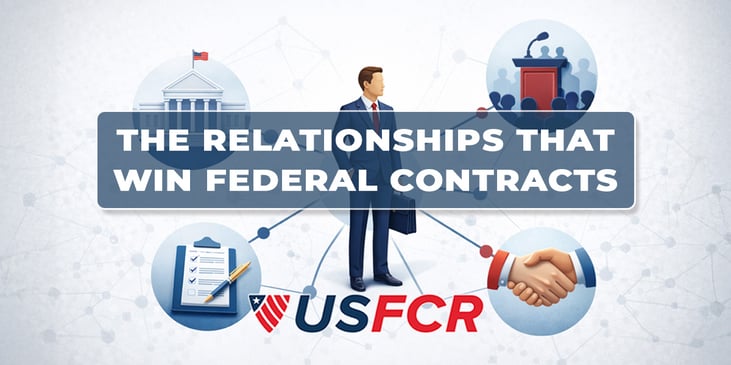
You've registered in SAM, checked all the boxes, and set up your email alerts. Now you're waiting for the perfect opportunity to land in your inbox. Months pass. Maybe you bid on a few things and hear nothing back. Meanwhile, you're watching companies with similar capabilities win contracts you never even knew existed.
Here's what nobody tells new contractors: the best opportunities often get decided before they hit SAM. Not because the system is rigged, but because smart contractors build relationships long before the solicitation drops.
Federal contracting isn't as "wired" as people think. Incumbents don't automatically win. Agencies don't secretly hand contracts to their buddies. What does happen is that contractors who show up early, consistently, and with genuine value get remembered when requirements start forming.
Let's talk about where those relationships actually get built.
Industry Days: Your First Real Look at What Agencies Need
Every federal agency hosts industry days throughout the year. These aren't trade shows where you swap business cards and hope for the best. They're structured events where contracting officers, program managers, and small business advocates explain upcoming requirements and answer vendor questions.
What happens at an industry day: Agency leadership presents their procurement forecast. They explain what they're buying, when they're buying it, and what kind of contractors they're looking for. You get to ask questions. Sometimes you get one-on-one time with buyers.
Why this matters for your business: When a contracting officer sees your face before the RFP drops, your proposal isn't just a pile of paper. It's from someone they've met. Someone who asked smart questions. Someone who took the time to understand what they actually need.
The U.S. Department of Commerce, State Department, and dozens of other agencies host these events regularly. Most are free. Many happen quarterly. And surprisingly few contractors bother to show up.
Agency Small Business Offices: Your Direct Line to Opportunity
Every federal agency has an Office of Small and Disadvantaged Business Utilization. Most contractors don't know they exist. Even fewer use them correctly.
What these offices actually do: Small business advocates help agencies meet their small business contracting goals. They know which contracts are coming up. They know which program managers need small business partners. They want to connect you to opportunities because your success is literally their job performance metric.
How to use them: Call or email and introduce yourself. Explain your capabilities clearly. Ask about upcoming outreach events. Request meetings with relevant program offices. Follow up when they give you a lead.
This isn't networking in the traditional sense. It's using a resource the government built specifically to help small businesses like yours find contracts. These advocates track set-aside targets and know when their agency is behind on goals. That information is valuable.
Pre-Solicitation Conferences: Where Requirements Get Shaped
Before major contracts hit the street, agencies often hold pre-solicitation conferences. These are formal meetings where potential vendors learn about upcoming requirements and sometimes provide input that shapes the final solicitation.
What you gain by attending: You see the requirement before your competitors who only watch SAM. You hear what the agency really cares about, which might differ from what eventually appears in writing. You can ask clarifying questions that help you decide whether to pursue the opportunity. Sometimes you discover teaming partners.
The strategic advantage: When you respond to sources sought notices or RFIs before the formal solicitation, you influence whether the contract gets set aside for small business. If capable small businesses don't respond to market research, the agency might decide only large businesses can do the work. Your response to a Sources Sought literally affects whether you get a chance to compete.
Association Conferences: Where Primes Find Subcontractors
Large prime contractors need small business subcontractors to meet their subcontracting plan requirements. They're required by law to use small businesses on major contracts. But they're not going to scroll through SAM looking for random companies to call.
Where primes actually find partners: National small business contracting summits, SAME Federal Small Business Conference, agency-specific industry events, and professional association gatherings. These events bring together primes actively looking for small business teaming partners and small businesses looking for exactly that introduction.
What makes you memorable: Showing up with a clear capability statement, knowing exactly what you do well, and being able to explain in 30 seconds how you solve problems primes face on federal contracts. Primes don't want to explain federal contracting to you. They want partners who already understand the game.
The National Small Business Federal Contracting Summit, held multiple times each year, specifically structures matchmaking sessions where small businesses meet directly with agency buyers and prime contractor representatives.
Responding to Market Research: The Most Overlooked Opportunity
Before formal solicitations, agencies often post Sources Sought notices or Requests for Information. These aren't contracts. They're the government asking whether capable vendors exist.
Why most contractors ignore these: No immediate payoff. No contract to win. Takes time to write a response that won't directly result in money.
Why smart contractors respond every time: Your response influences whether the contract becomes a small business set-aside. Contracting officers remember companies who responded thoughtfully. You learn about requirements months before competitors who only watch for formal solicitations. Your response demonstrates capability before anyone else has a chance to submit a proposal.
When a contracting officer sees your Sources Sought response, then your RFI response, then your proposal six months later, you're not a stranger. You're a company that's been engaged from the start.
Why SAM Isn't as "Wired" as People Think
New contractors often assume the deck is stacked. Incumbents always win. Contracts go to the same companies every time. The government already knows who they want.
The data tells a different story. Incumbent win rates have declined significantly. Agencies actively seek new vendors when incumbents underperform. Set-aside programs specifically exist to give small businesses access they wouldn't otherwise have.
What actually happens: Agencies are required by law to conduct market research. They're required to consider small business participation. Contracting officers who ignore qualified vendors face scrutiny. The system has more fairness mechanisms than most contractors realize.
Where the real advantage comes from: Not who you know in some corrupt sense, but who knows you're capable, available, and interested. Showing up to industry days, responding to market research, building relationships with small business advocates. These aren't shortcuts around the system. They're exactly how the system is designed to work.
The contractors who win consistently aren't gaming anything. They're just using all the access points the federal government provides.
How to Start Building These Relationships
This month: Find one industry day or small business event related to your target agencies. Register. Show up. Listen more than you talk. Bring capability statements.
This quarter: Contact the OSDBU at your top three target agencies. Introduce yourself. Ask about upcoming events and opportunities. Follow their forecasts.
This year: Respond to every relevant Sources Sought and RFI in your space. Attend at least one major small business contracting conference. Build a relationship with one prime contractor who works in your area.
None of this requires insider connections or special access. It requires showing up where buyers and partners gather and demonstrating that you understand what they need.
Moving From Registration to Relationships
SAM registration gets you in the system. It doesn't get you contracts. The contractors who build federal revenue consistently do the relationship work that most companies skip. They attend events. They respond to market research. They build presence before solicitations drop.
The opportunities are there. The events are usually free or low cost. The small business offices exist specifically to help you. The question is whether you'll use these access points or wait for the perfect RFP to find you.
USFCR has helped over 300,000 businesses position for federal contracting success, and our clients have won over $1.5 billion in federal contracts. If you're ready to move beyond registration and build a real federal contracting strategy, speak to a USFCR Registration and Contracting Specialist.

FAQ
How do I find industry days for agencies I want to work with? Check each agency's Office of Small and Disadvantaged Business Utilization website. They list upcoming outreach events, industry days, and small business conferences. You can also monitor SAM for special notices announcing these events.
Do I need to be registered in SAM to attend industry days? Usually no. Most industry days are open to any business interested in working with the agency. However, having your SAM registration complete before attending shows you're serious about federal contracting.
What should I bring to a small business networking event? Bring professional capability statements (one page), business cards, and a 30-second description of what your company does. Know your NAICS codes and any set-aside certifications you qualify for. Leave the sales pitch at home.
How early before a solicitation should I start building relationships? The earlier the better. Responding to Sources Sought notices and attending industry days 6-12 months before major procurements gives you time to understand requirements and position your company. Starting when the RFP drops means you're already behind competitors who engaged earlier.
Can responding to an RFI really influence whether I get a contract? Not directly, but responding to RFIs and Sources Sought notices influences whether contracts get small business set-asides, what the requirements look like, and whether the contracting officer recognizes your company when proposals arrive. It's about positioning, not guarantees.
FAQ View full FAQ page: https://usfcr.com/resources/faq/
Top Articles
The 17 Most Common Types of Government Contracts Explained
Writing a Winning Capabilities Statement in 2025
Understanding Federal Set-Asides