USFCR Blog

Year-End Compliance Checklist: 2026 vs. 2027 Requirements

Oct 15, 2026, 10:30:00 AM / by Kyle Hayes posted in Guides, News, Federal Spending, Registration & Compliance Management

Quick Answer

A year-end compliance checklist for federal contractors covers two lists this year: the standing items that renew every year, led by SAM registration and certification maintenance, and the items that changed for 2027, including a new performance-record model on DoD contracts, documentation obligations that now follow a contract through its whole lifecycle, and a CMMC certification requirement currently on hold pending a DoD review. Working both lists in December protects eligibility before January pursuits begin.
Read More

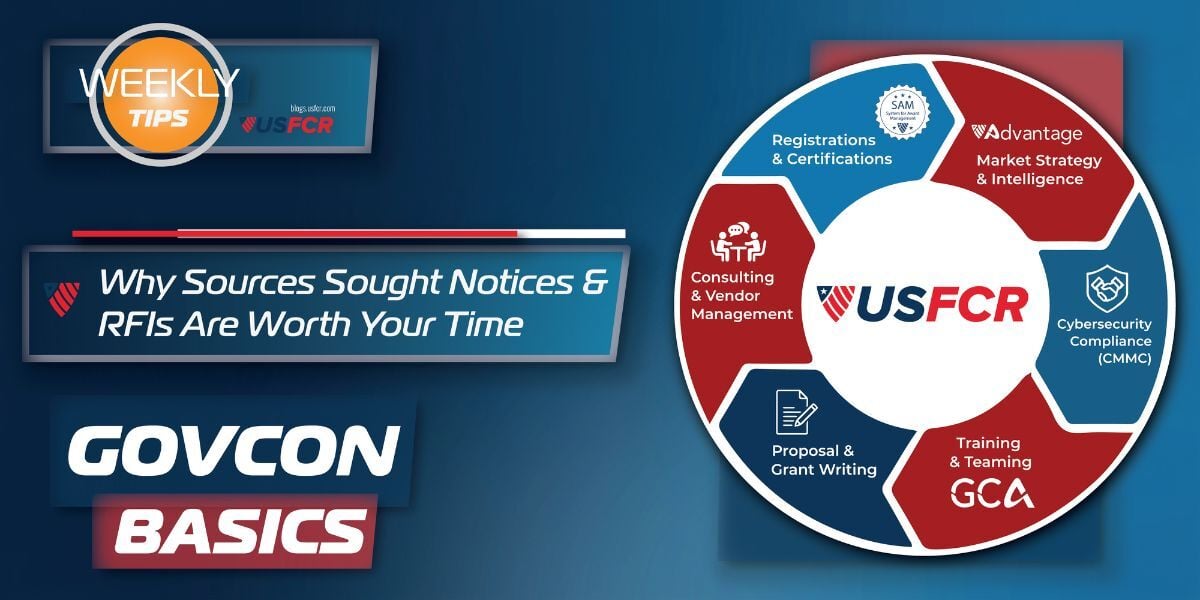
Why Sources Sought Notices and RFIs Are Worth Your Time

Oct 14, 2026, 10:30:00 AM / by Kyle Hayes posted in Guides, Federal Spending, Registration & Compliance Management

Quick Answer

Sources sought notices and requests for information (RFIs) are market research tools agencies use before writing a solicitation, not the solicitation itself. Responding matters because it gives the contracting officer documented evidence to set the work aside for small businesses and to avoid writing requirements only one company can meet. Skip these notices, and you're showing up after the requirement and the set-aside decision are already locked in.

Read More

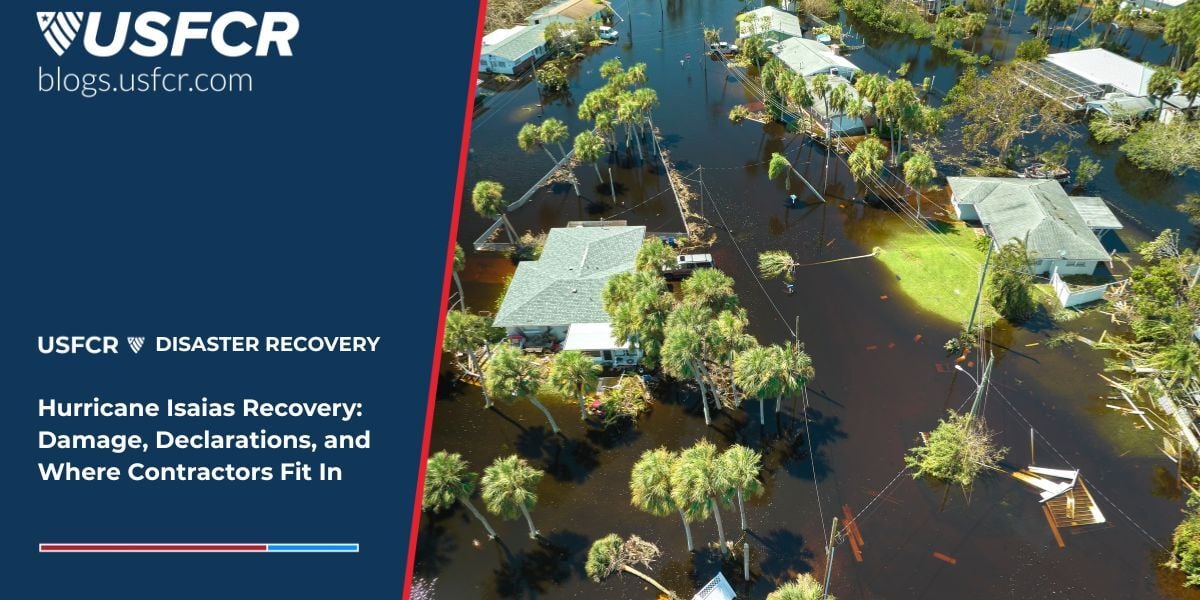
Hurricane Isaias Recovery: Damage, Declarations, and Where Contractors Fit

Oct 13, 2026, 12:59:59 PM / by Kyle Hayes posted in Guides, Disaster Relief, Federal Spending, Registration & Compliance Management

Quick Answer

Hurricane Isaias made landfall near Destin, Florida, on October 9, 2026, as a Category 2 storm, and recovery is still in the emergency stage. Federal emergency declarations for parts of Florida, Alabama, and Georgia currently fund only emergency protective measures. That means most contractor work right now runs through counties, cities, and established prime contractors. An active SAM registration with a Disaster Response Registry listing is the first step toward getting involved.

Read More

Overhead Rates: Government vs. Commercial Explained

Oct 13, 2026, 10:30:00 AM / by Kyle Hayes posted in Guides, Federal Spending, Registration & Compliance Management

Quick Answer

In commercial business, overhead is a private number folded into your price, and customers judge only the price. In government contracting, overhead becomes a structured, visible rate: indirect costs are grouped into defined pools, applied through calculated rates, and, on cost-type work, billed provisionally and settled against actuals. The difference shapes how you price, what your accounting system must do, and how buyers judge whether your numbers are realistic.

Read More

Why Government Buyers Care About Incurred Cost Submissions

Oct 8, 2026, 10:30:00 AM / by Kyle Hayes posted in Guides, Federal Spending, Registration & Compliance Management

Quick Answer

Government buyers care about incurred cost submissions because on cost-reimbursement and time-and-materials contracts, the government pays a contractor's actual allowable costs, and the annual submission is how those costs get verified and settled. Commercial buyers rarely look inside a supplier's books, while a federal buyer paying actual costs must. The submission is due within six months of the contractor's fiscal year end, and being ready for it signals readiness for cost-type work.

Read More

Procurement Forecast Changes for FY2027

Oct 6, 2026, 10:30:00 AM / by Kyle Hayes posted in Guides, Federal Spending, Registration & Compliance Management

Quick Answer

The biggest change to procurement forecasting heading into FY2027 is standardization, not full consolidation. In November 2024, OMB directed agencies to standardize forecast data and centralize it on GSA's Forecast of Contracting Opportunities (FCO) tool, with alignment due by the end of Q3 FY2026. That deadline has passed, but adoption remains uneven. Treat the FCO tool as a starting point for FY2027 research, not the only stop.

Read More

Small Business Month: Resources and Revisiting Networking Events

Oct 1, 2026, 10:30:05 AM / by Kyle Hayes posted in Guides, Events, Registration & Compliance Management

Quick Answer

May's Small Business Month, anchored by National Small Business Week on May 3 through 9, spotlighted free resources that remain available all year, from SBA training to no-cost counseling networks. The months that follow are when event connections either become pipeline or fade, which makes now the time to revisit those resources, follow up with the people you met, and plan your fall networking calendar.

Read More

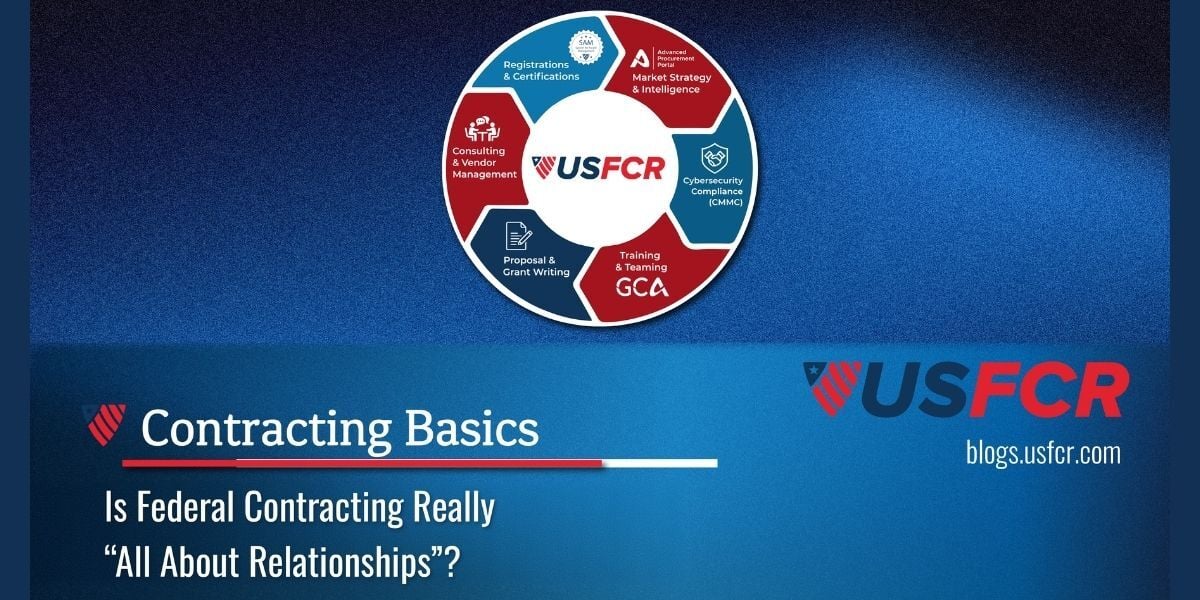
Is Federal Contracting Really 'All About Relationships'?

Sep 30, 2026, 10:30:00 AM / by Kyle Hayes posted in Guides, Registration & Compliance Management

Quick Answer

Relationships can help you get noticed before a contract is competed, but they won't decide who wins it. Once a solicitation is out, federal agencies have to score every proposal against the exact criteria they published in that document. So the strongest proposal usually beats the strongest relationship, not the other way around. The practical move is to build visibility and connections before a solicitation drops, then win the actual competition with a proposal built around exactly what the agency said it would judge.

Read More

Building Your FY2027 Pursuit Team

Sep 29, 2026, 10:30:00 AM / by Kyle Hayes posted in Guides, Federal Spending, Registration & Compliance Management

Quick Answer

Building an FY2027 pursuit team means assigning, before the year's opportunities arrive, who covers each part of winning federal work, from finding and qualifying opportunities to writing proposals, keeping compliance current, and delivering after award. For most small contractors, that team blends internal roles, teaming partners, and outside support, and naming who owns each job is what keeps pursuits from stalling against a deadline.

Read More

CPARS Updates: How Performance Reviews Changed

Sep 24, 2026, 10:29:59 AM / by Kyle Hayes posted in Guides, Federal Spending, Registration & Compliance Management

Quick Answer

CPARS still uses the five-point adjectival scale. The negative-events-only model that circulated widely in late 2025 was proposed in both chambers of the FY2026 defense authorization but was dropped before the bill was signed on December 18, 2025. What did change is where past performance gets used. Under the FAR overhaul, evaluations on contracts awarded on or after April 1, 2026 can inform decisions across the full contract lifecycle, not just source selection.

Read More