USFCR Blog

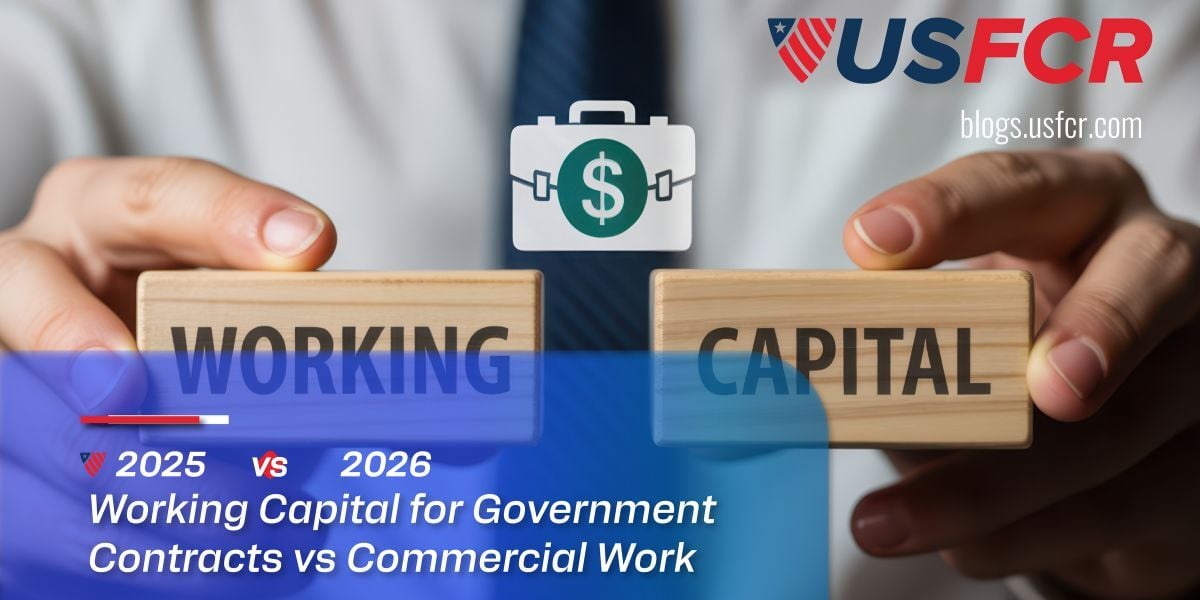
Working Capital for Government Contracts vs. Commercial Work

Sep 10, 2026, 10:30:00 AM / by Kyle Hayes posted in Guides, Federal Spending, Registration & Compliance Management

Quick Answer

The biggest working capital difference is timing. The government is a reliable payer and owes interest on late invoices, but it generally pays after you perform the work and submit a proper invoice, which means you often need capital to cover costs before payment arrives. Commercial work varies more in payment reliability but is often more flexible on terms. Planning for that gap is the key to taking on government work without straining cash flow.

Read More

New Fiscal Year, New Opportunities: FY2027 Preview

Sep 8, 2026, 10:30:00 AM / by Kyle Hayes posted in News, Federal Spending, Registration & Compliance Management

Quick Answer

FY2027 begins October 1, 2026, and with it the federal funding cycle resets, opening a fresh year of contracting opportunities. Several known developments shape the new year: cybersecurity certification requirements continue expanding for defense work, higher simplified acquisition thresholds keep more buying in the faster lane, and the federal acquisition rules continue to be streamlined. The practical takeaway is to start the year ready and positioned.

Read More

End of Fiscal Year: The Busiest Month in Federal Contracting

Sep 3, 2026, 10:30:00 AM / by Kyle Hayes posted in Guides, Federal Spending, Registration & Compliance Management

Quick Answer

September is the busiest month in federal contracting because the fiscal year ends September 30, and agencies work to put the funding available to them to use before it expires. That concentrates a large share of the year's contract activity into the final weeks, with more awards, faster timelines, and more lower-dollar, quick-turn buys. For contractors who are ready, it is one of the most active opportunity windows of the year.

Read More

How to Win Your First Federal Contract With No Past Performance

Sep 2, 2026, 10:30:00 AM / by Kyle Hayes posted in Guides, Federal Spending, Registration & Compliance Management

Quick Answer

A federal contractor without prior government past performance can still win a first contract by targeting purchases that do not weigh past performance heavily, such as micro-purchases under $15,000, simplified acquisitions under $350,000, and subcontracting or joint venture work, which now counts toward a small business's past performance record under federal rules. Building this record realistically costs $80,000 to $130,000 and can take up to two years before it pays off.

Read More

Setting FY2027 Revenue and Growth Goals

Sep 1, 2026, 10:30:00 AM / by Kyle Hayes posted in Guides, Federal Spending, Registration & Compliance Management

Quick Answer

Setting realistic FY2027 revenue and growth goals starts with your current federal revenue, not a number you hope to hit. From there, you set a growth target your capacity and pipeline can actually support, then work backward to the pursuits and win rate it would take to get there. The federal fiscal year begins October 1, so the time to set these numbers is now.

Read More

Pre-FY2027 Assessment: Positioning for the New Fiscal Year

Aug 20, 2026, 10:30:00 AM / by Kyle Hayes posted in Guides, Federal Spending, Registration & Compliance Management

Quick Answer

Positioning for a new fiscal year means using the months before October 1 to put your strategy, pipeline, and compliance in place so you can compete from the start of the year instead of ramping up once it is already underway. For federal contractors, the businesses that plan ahead of FY2027 tend to move faster when agency spending picks up.

Read More

Trade Agreement Act Compliance: What's New

Aug 11, 2026, 10:30:01 AM / by Kyle Hayes posted in News, Federal Spending, Registration & Compliance Management

Quick Answer

Trade Agreements Act compliance means that, on covered federal contracts above a set dollar threshold, the products you offer must be made or substantially transformed in the United States or a designated country. What is new for 2026 is a routine update to those dollar thresholds, effective March 13, 2026. The core compliance rules are unchanged, and because the thresholds adjust on a regular cycle, the practical step is to verify the current figure for a given contract.

Read More

What to Do in August to Position for the Year-End Surge

Aug 6, 2026, 10:30:00 AM / by Kyle Hayes posted in Guides, Federal Spending, Registration & Compliance Management

Quick Answer

August is the positioning month for federal contractors, the last full window before the September year-end surge. The highest-leverage moves now are market-facing: research the opportunities likely to move at year-end, reach out to buyers and primes while they still have time to talk, and make sure you are visible and findable. Position well in August, and you are ready when the buying rush hits in September.

Read More

Simplified Acquisition Procedures: Important Changes You Should Know

Jul 30, 2026, 10:30:00 AM / by Kyle Hayes posted in Simplified Acquisition Program (SAP), News, Federal Spending, Registration & Compliance Management

Quick Answer

The simplified acquisition thresholds increased effective October 1, 2025, the start of fiscal year 2026. The micro-purchase threshold rose from $10,000 to $15,000, and the simplified acquisition threshold rose from $250,000 to $350,000. The practical effect is that more federal purchases now fall into the faster, lighter simplified buying lane, a space where small businesses compete well and a clean, responsive quote matters more than a long proposal.

Read More

Why You Can't Negotiate with the Government (And What You Can Negotiate)

Jul 16, 2026, 10:30:00 AM / by Kyle Hayes posted in Guides, Federal Spending, Registration & Compliance Management

Quick Answer

You cannot negotiate with the government the way you negotiate a commercial deal. The posted rules of a solicitation apply equally to every bidder, so there are no side deals, special terms, or haggling over the requirements. But the idea that you cannot negotiate at all is a myth. Federal contracting has defined points, including negotiated procurements, sole-source awards, and contract modifications, where negotiation is expected.

Read More