An active SAM registration does a lot more than check a compliance box. With your UEI and CAGE code, it lets you bid on federal contracts and apply for grants, get paid electronically, compete for small business set-asides, team with prime contractors, and show up when contracting officers search for vendors. To get the most from it, renew it every year, keep your NAICS codes and business size accurate, complete your SBA Small Business Search profile, and opt into the registries that fit your business.
The NAICS codes on your SAM registration control whether contracting officers find you when they run market research. They do not control what you are allowed to bid on. Those are two different things, and mixing them up leads businesses to load their registration with codes they cannot actually perform.
Size standards are where real eligibility lives. Each NAICS code carries its own size standard, and whether you qualify as small for a specific opportunity depends on the size standard attached to the code on that solicitation.
Here is how both pieces work and how to get your codes right.
What NAICS codes on your registration actually do
NAICS codes are a discoverability mechanism. When a contracting officer or a small business specialist searches for vendors who can perform a requirement, they filter by NAICS code. If you carry the code, you appear in that list. If you do not, you are invisible to that search.
That is the practical function. Your codes decide which market research results you show up in, which vendor lists you land on, and which sources sought notices are likely to reach you.
What NAICS codes do not do
Your registration codes do not gate what you can bid. The contracting officer assigns a single NAICS code to each solicitation based on the principal purpose of the requirement. You can respond to any solicitation you are qualified to perform, whether or not that exact code sits on your profile.
This is the single most clarifying fact for anyone trying to understand how the system works. The code on the solicitation is the government's classification of the work. The codes on your profile are how you describe yourself.
Who assigns the NAICS code on a solicitation
The contracting officer does, before the opportunity is posted. That assignment determines the applicable size standard for that buy and, by extension, who qualifies as small for it. If you believe a solicitation has been misclassified in a way that affects competition, there is a formal process for challenging the assignment through the SBA Office of Hearings and Appeals within a limited window after the solicitation is issued.
Where eligibility genuinely applies
Small business size standards are tied to NAICS codes, and they are a real eligibility gate. Each code has its own standard, stated either as average annual receipts or as number of employees. Whether you qualify as small for a particular opportunity is determined by the size standard attached to the NAICS code on that solicitation.
That means you can be small under one code and other than small under another. A firm that qualifies as small for a janitorial requirement may not qualify for a facilities support services requirement, because the standards differ.
Check your standard here: the SBA table of small business size standards lists the current threshold for every code. The table currently in effect took effect March 17, 2023.
One note on what is coming: SBA published a proposed rule on August 20, 2026 that would revise size standards across many industries and consolidate how they are structured. It is a proposal, not a final rule. Current standards remain in effect, and nothing has changed for your registration today. Watch for a final rule before making any structural decisions.
How to pick your codes: work backward from real opportunities
Start with the work you want, not with a keyword search. The Census Bureau tool is useful for confirming a definition, but searching it by keyword produces codes that describe you in the abstract rather than codes that describe the buys you want to win.
The better exercise: look at solicitations and awards for the work you actually pursue, note which NAICS codes those buys were classified under, and make sure you carry those codes.
Read the gaps both ways. If work you want keeps appearing under a code you do not have, that is a gap worth closing. If you carry codes that never appear on anything you would realistically bid, they are doing nothing for you.
Then confirm the definition: use the Census Bureau NAICS tool to read the full description of each candidate code and make sure the code means what you think it means. The 2022 edition is the current one. For example, janitorial services fall under 561720, while landscaping services fall under 561730.
How many NAICS codes should you carry
Carry the codes that describe work you can actually perform, and no more. There is no prescribed maximum, but businesses that are winning work typically carry a focused list covering what they deliver rather than dozens of codes spanning unrelated industries.
Padding hurts you in two specific ways. A profile stuffed with codes you cannot deliver on looks like a shell company to anyone doing market research, which is the opposite of the impression you want when a contracting officer is building a vendor list. It also makes a capabilities statement impossible to write, because a document that claims everything communicates nothing.
The honest test: for every code on your list, could you credibly walk into a debrief and defend past performance, staff, and process for that work? If not, remove it.
Primary and secondary codes in SAM
Your primary NAICS code should reflect your main line of business, meaning the work that generates the most revenue. Secondary codes cover the other services you genuinely deliver.
The distinction matters for how you are represented in SAM and how your business appears in vendor searches. It does not change the underlying rule that eligibility on any given solicitation runs off the code the contracting officer assigned to that solicitation.
Keeping your codes current
Review your NAICS list at least once a year and whenever your business changes what it sells. Codes that made sense when you registered may not describe the company you are now. If you have added a service line, add the code. If you have exited one, drop it.
Updating your codes in SAM also matters for how your small business status displays. Your profile reflects status based on the codes and financial data in your registration, so a stale registration produces a stale picture of your business.

FAQ
Do I need the NAICS code on a solicitation to bid on it? No. The contracting officer assigns a NAICS code to each solicitation. You can respond to any solicitation you are qualified to perform. Carrying the code helps contracting officers find you during market research, which is a separate benefit.
Can adding more NAICS codes make me eligible for more contracts? No. Additional codes make you discoverable in more searches, but they do not create eligibility. Only add codes for work you can actually perform.
How does my size standard get determined? By the NAICS code assigned to the specific solicitation, not by the codes on your registration. Check the current threshold for that code in the SBA table of size standards.
Can I be small under one code and not another? Yes. Size standards vary by industry, so your status can differ from one code to the next.
How often should I update my NAICS codes? At least annually, and any time your service offerings change.
FAQ View full FAQ page: https://usfcr.com/resources/faq/
Related reading
Getting your NAICS codes right is the difference between showing up in the searches that matter and staying invisible to the buyers you want. If you want help auditing your current list against the work you are actually pursuing, speak to a USFCR Registration and Contracting Specialist at (866) 216-5343.
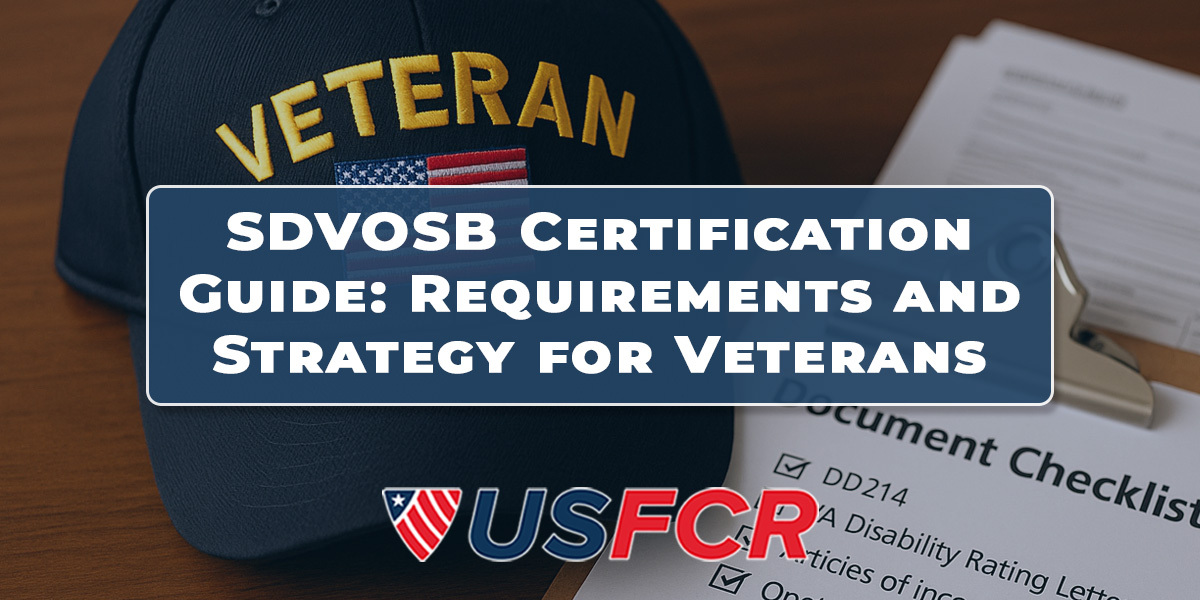
SDVOSB certification is free, handled entirely by the SBA, and it is the only way for a veteran-owned firm to count toward federal SDVOSB contracting goals. Most denials come down to paperwork that does not line up, not to whether the owner is a service-disabled veteran. The SBA reported an average processing time of 12 days as of November 2025, but it publishes no guaranteed deadline, and incomplete applications still take far longer.
.png)
Understanding Federal Set-Asides
The federal government continues to reserve approximately 23% of its contracting budget specifically for small businesses. That is over $178 billion in opportunities annually. These set-aside programs are not just compliance checkboxes. They are your business's pathway to consistent federal revenue and sustainable growth.
Without set-aside protections, most small businesses would struggle to compete against major defense contractors and Fortune 500 companies. Set-asides level the playing field and create dedicated opportunities for businesses like yours.
Teaming agreements open doors that are closed to contractors working alone. A small IT firm partners with a construction company to pursue a complex base modernization contract. A certified WOSB adds a cybersecurity specialist to its team and qualifies for a solicitation it could not win independently. The principle is straightforward: the right partnership expands what you can pursue.
But teaming in federal contracting comes with rules. The SBA's affiliation and ostensible subcontractor regulations got meaningful updates in 2025, and contractors who have not revisited their teaming documentation since then may be carrying compliance gaps they do not know about.
Here is how teaming agreements work, what compliance requires, and what changed.
If you work for a federal contractor and your contract is coming up for recompete, someone in your office is probably nervous. Maybe that someone is you. You've heard the term "recompete" and you know it means something is changing, but you're not sure what it actually means for your paycheck, your clearance, or whether you'll still have a job in six months.
You found an RFI on SAM.gov. You spent two days pulling together a thoughtful response: your capabilities, your experience, your interest in the requirement. You hit submit.
And then nothing.
No confirmation. No follow-up. No "thanks for your input." Just silence.
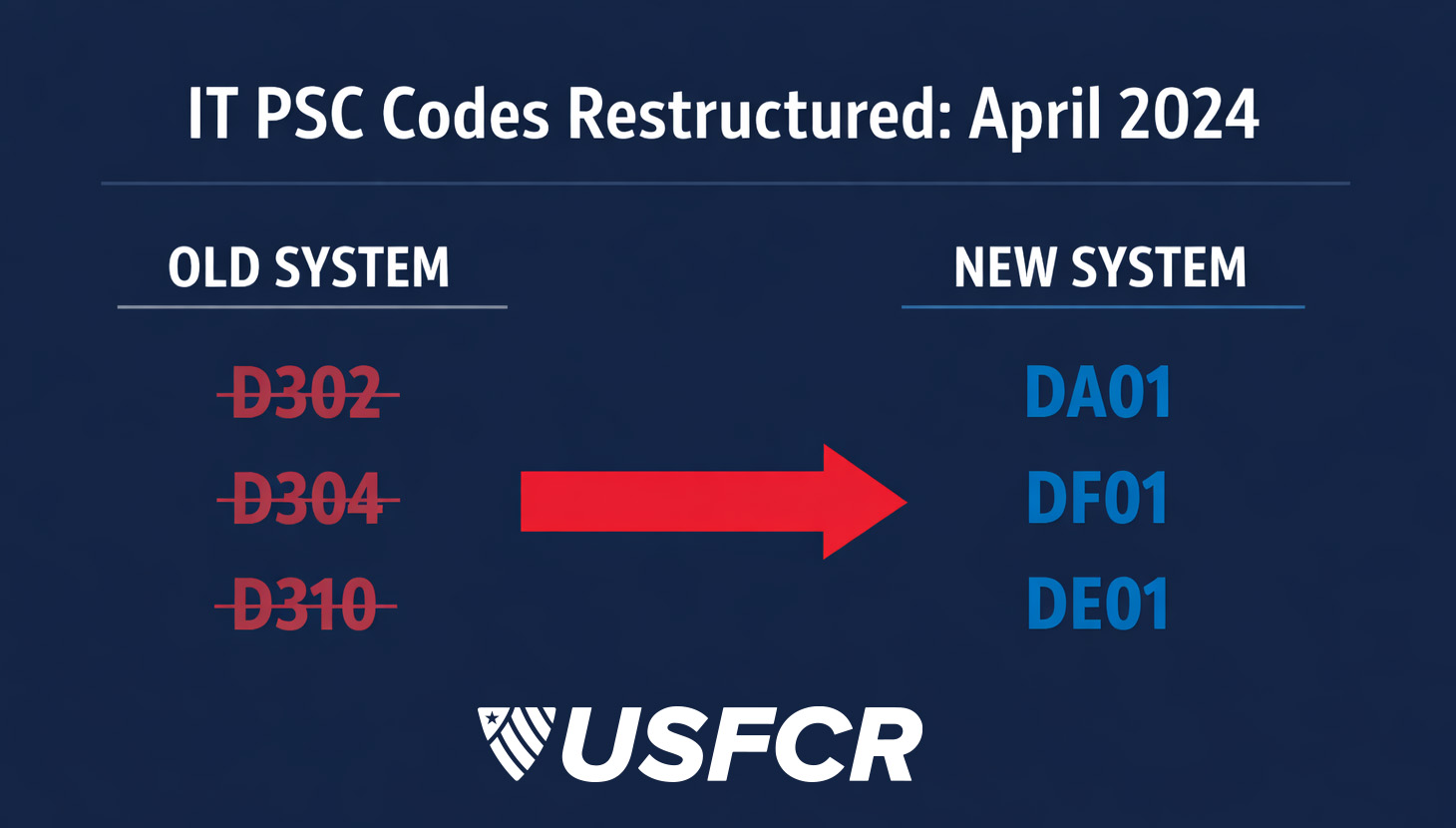
If you have been searching SAM using IT product service codes from a training you took two years ago, there is a good chance your market research has gaps in it right now.
In April 2024, the federal government restructured its entire IT services PSC framework. Sixty-eight legacy codes were end-dated. Forty new codes replaced them. The naming convention changed completely. And most small IT contractors have no idea it happened.
This guide explains what PSC codes are, what changed, and exactly how to update your market research so you stop missing opportunities coded under the new system.
You've heard it a hundred times. You've probably said it yourself.
"I can't win federal contracts because I don't have past performance. And I can't get past performance without winning federal contracts."
It sounds like an unbreakable loop. A catch-22 that keeps new businesses locked out of a $700 billion federal marketplace while the same established contractors win the same contracts year after year.
Here's what nobody's telling you: that narrative is wrong.
Defense contractors face a critical verification challenge that most don't recognize until it costs them. When you hire someone who claims Secret clearance, you're operating on trust until the security office confirms their status. That gap between hire date and verification creates liability, delays contract staffing, and occasionally reveals candidates who've misrepresented their clearance history entirely.
